Showing posts with label reviews. Show all posts

April 15, 2012

Catch-Up Links

While I was on medical hiatus, I stopped writing for Heroes & Heartbreakers. I continued my work for Publishers Weekly and, as I felt well enough, wrote some brief reviews for Amazon and Amazon Vine. Here are the links you missed, beginning with a link from my return to the H&H rotation:


Share/Bookmark

November 1, 2011

Quite Enough of Calvin Trillin

Quite Enough of Calvin Trillin

Calvin Trillin

Grade: B

"Calvin Trillin is a wonderfully funny storyteller, whether or not his stories are true or fictional. He's a quintessential New Yorker, but his appeal is universal, if more than a little ethnic. I'd read previously many of the essays included in this new compilation, but re-reading them was just as funny the second time around. The essays, some of which are more than thirty years old, remain funny today; many that were written in the Reagan era could have been written last week. The included essays are short enough and filled with enough gems of humor that they simply cry out to be read aloud, and in this instance my husband was the happy recipient."

Read this review in its entirety at Amazon. It is not a Vine review; I received a digital copy from the publisher.


Share/Bookmark

September 24, 2011

Invicta Men's 1107 Pro Diver Chronograph Black Dial Black Polyurethane Watch

Men's 1107 Pro Diver Chronograph Black Dial Black Polyurethane Watch

Invicta

Grade: C

When this watch became available on Amazon Vine, I ordered it for my brother-in-law to try because he is quite tall and the watch face, at 49 milimeters, is large. After wearing it for a month, he provided me with these pros and cons, first noting that the watch is a diver's watch and he does not dive...

Read this Amazon Vine review in its entirety at Amazon.


Share/Bookmark

September 14, 2011

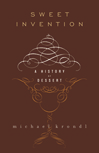
Sweet Invention

Michael Krondl

Non-Fiction

Grade: B-

Michael Krondl’s Sweet Invention: A History of Dessert, takes readers on an often fascinating journey of desserts in six “dessert superpower” regions: India, the Middle East, Italy, France, Austria, and the United States. The history of food...even of the icing on the cake as opposed to the cake itself...is as terrific a way to impart knowledge as is the history of fashion. Both are surprisingly good as they give us an accessible way to track changes over time in arenas as diverse as politics, economics, religion, transportation and other technological advances, gender issues, the culture as a whole, and how societies are organized over time.

Though copiously researched, Krondl doesn’t give each of the six “superpowers” equal time, which may satisfy historians more than the casual student of history or foodie. I learned a great many tidbits about India in particular, and I’m glad now to know that they love their sweets; that because there are so many gods/goddesses and avatars, there are lots and lots of sweet-filled holidays; that sweets are more associated with boys than girls; that the lack of Western-type ovens results in lots and lots of fried sweets and none that are baked; and that the circumcision of boys does not occur at birth but rather between the ages of seven and twelve. But I wish more word count had been devoted to the particular history I crave: European and “American.” I realize this says as much about my character deficiencies as it does the book’s, but the history I did learn about the intersection of dessert and culture, gender, economics, politics, and people in Europe and the U.S. was so fascinating I simply craved more.

For instance, I already knew the American preference for milk chocolate as opposed to the French preference for darker, less sweet chocolate, but I didn’t know how Milton Hershey’s deprived childhood played into it. Or that population density...or lack thereof...along with changes in technology, the move from feudal, rural, and aristocratic cultures to urban living and the eventual growth of the middle class tied into when we ate, who prepared our savories and sweets, and for whom they were prepared. Krondl creates linkages out of changes in social economic status, democracy, even the Baby Boom, and his thought-provoking connections deserve study.

It seems obvious that if the mode of dress for an adult male is the same as it is for a 12-year-old boy (jeans, t-shirt, baseball cap), that his palette will differ from an adult male who requires a valet to dress and groom himself. It seems equally obvious that when a culture is focused on maintaining a power structure or Keeping Up with the Rothchilds, different attitudes toward food will develop in comparison to cultures simply sustaining themselves on the frontier...or those with a focus on individuality, portability, and ease of creation. These things seem obvious but only after you begin to actually consider them.

What worked less for me were all the desserts that frankly sounded quite the same to me. Yes, the actual history of the Sacher and Linzer Tortes intrigued me; I was less fascinated with the myriad descriptions of this or that fried sweet. Sometimes a donut, after all, is just a donut. Why not, instead of only focusing on how sugar is refined and how pricing affected dessert, also delve into the varieties of caramel, who invented the creme brûlée, or indeed thought to brûlée sugar?

My only other criticism is that I felt the author gave short shrift to some of the more modern history of dessert, although his insight that today’s restaurant pastry chefs are more innovative than are those at bakeries and pâtisseries was spot on. Sweet Invention wasn’t a perfect recipe for the history of dessert, but it provides ample food for thought.


Share/Bookmark

August 13, 2011

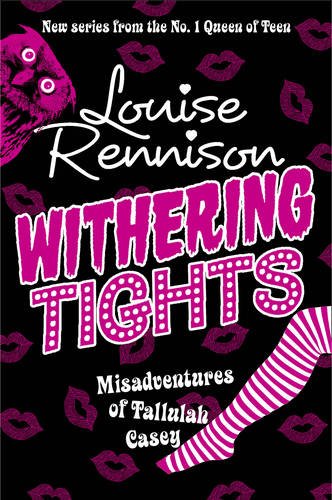
Withering Tights by Louise Rennison

Withering Tights

Louise Rennison

Young Adult/Chick Lit for Teens

Grade: B

"As an avid fan of the first several Georgia Nicholson books, I jumped at the chance to read and review Withering Tights, which kicks off a new series by Louise Rennison. Although my daughter and I both outgrew the original series by the time we'd finished book five, I hoped for the best, and was not at all disappointed."

Read this Amazon Vine review in its entirety at Amazon.


Share/Bookmark

August 6, 2011

You Don't Sweat Much for a Fat Girl by Celia Rivenbark

You Don't Sweat Much for a Fat Girl

Celia Rivenbark

Humor

Grade: B-

"If Joe Bob Briggs and Libby Gelman-Waxner had a love-child (improbable in more ways than one, not the least of which is that both were invented characters) who grew up Southern and wrote a book, she would be Celia Rivenbark and the book would be You Don't Sweat Much for a Fat Girl. Filled with colorful, inventive and often invented prose, pop culture-infused content that remains unconcerned with political correctness, mockery of self and others, the book is breezy and easy to read fun."

Read this brief Amazon Vine review in its entirety at Amazon.


Share/Bookmark

August 3, 2011

The Philosopher and the Wolf by Mark Rowlands

The Philosopher and the Wolf

Mark Rowlands

Grade: B

Non-Fiction

The eleven years philosophy professor Mark Rowlands spent with Brenin the wolf at his side profoundly impacted his life. He came to see himself less as an owner or guardian to the animal than as his brother—generally older, but sometimes younger, depending on the lesson learned, and which of them learned it.

The author immediately learned, for instance, that he could not leave Brenin alone or within moments the wolf would make his displeasure known in severley destructive ways. An adjunct to that lesson: If you keep a wolf, you must add $50k onto the price of your home, to cover the damage. Lesson number two? Well, as a result of lesson number one, Brenin accompanied the professor to class. Over time that required him to adjust the class syllabus with a warning that unless students kept foodstuffs in their backpacks thoroughly locked up, they could expect a visit from a foraging wolf. A third lesson: Brenin’s natural, ahem, exuberence could only be overcome by fatigue, so Rowlands learned to tire him out each day through long, long runs. And a fourth: It’s possible to teach a wolf to heel, but you must out-alpha a wolf, and vigilantly maintain that stance throughout the relationship.

The most important lesson learned, though, was one Brenin taught Rowlands while still a pup. It’s predicated on the author’s thesis that as a result of evolution, the worldview of man is simian in origin. As such we rely on social intelligence, so that our subsequent civilization is built upon scheming, plotting, and lying. That's a condensed, bald description, but I think it's an accurate one. After all, in the review of the book by O, the Oprah Magazine, Rowlands is referred to as misanthropic. Which, frankly, is what drew me into requesting the book from @NetGalley for review.

Rowlands proves his point, at least to a degree. Think about it: We are here as a result of natural selection...survival of the fittest. Our ancestors didn’t stand in line for this or that—they made sure they went to the head of the line, or were the ones to create the line. They weren’t the nice ones or the meek, and the author describes in detail how a congregation of apes maintain their cohesion—through intimidation, side-deals, lying, and covering up—all of which makes his point rather nicely. His discussion of sex in the simian world versus the canine and lupine world fascinated me, and helped prove his point as well.

If apes rely on social intelligence, wolves rely on mechanical intelligence, and in ways that didn’t entirely carry through the process of domestication to dogs—did you know a wolf will learn how to open a door more quickly than a dog? Wolves are big on mechanical thinking while dogs accept a more magical form of thought, which he describes in a funny vingette about telephones.

There’s no subterfuge or grudge-holding in the wolf world; I kind of imagine, in reverse anthropomorphous, that Denis Leary would be a wolf. You see what you get, without any bullshit or sugar-coating.

When Brenin was around two months old...Rugger [a pit bull] lost his temper, grabbed Brenin by the neck and pinned him to the ground. Most puppies would have screeched out in shock and fear. Brenin growled. This was not the growl of a puppy, but a deep and calmn and sonorous growl that belied his tender age. That is strength. And that is what I have always tried to carry around with me, and I hope I always will. as an ape, I will fall short of this; but I have an obligation, a moral obligation, never to forget it and to emulate it as far as I can.If I can only be as strong as a two-month-old wolf cub, then I am a soil where moral evil will not grow.

An ape would have scurried away to darkly plot his revenge; to work out ways of manufacturing weakness in those who are stronger than him and who have humiliated him. And when that work is complete, then evil can be done. I am an ape through accident of birth. But in my best moments I am a wolf cub snarling out my defiance as a pit bull has smashed me into the ground. My growl is a recognition that pain is coming, for pain is the nature of life. It is the recognition that I am nothing more than a cub and, at any time, the pit bull of life can snap my neck like a twig. But it is also the will that I won’t back down, no matter what.

When the shit hits the fan, you will believe. When the shit hits the fan, people look for God. When the shit hits the fan, I remember a little wolf cub.

The Philosopher and the Wolf is filled with wonderful vingettes of Rowlands’ years with Brenin, interspersed with various philosophies, among them Sartre and Nietzche, to explain or justify various aspects of taking a wild animal and domesticating him. I’m not entirely sure his justification is 100% solid, but there’s no way I’m taking on a philosopher, who could talk a ring around me and lock me in within five minutes. In the end I'm satisfied Brenin's life was a happy one.

The book comes alive during those remembrances of Brenin, and occasionally falters when the philosophical or scientific sections seem to prattle on. It’s worth the prattling, because at the end the author does reach his point.

I love wolves and the idea of wolves, but this book is not solely for the wolf-obsessed. For the most part it's well-written, although the author's prose during the preface tended toward the purple. But as soon as Chapter One begins, with his bookending of Brenin's death and their first meeting and first hours together, I realized I was crying and laughing almost simultaneously. The lessons Rowlands imparts engross the reader because as all good teachers do, he provides vivid examples to accompany them. Because in the end what leaves the biggest impression for those who cherish animals, whether wild or domesticated, is the impact Brenin left on his brother.


Share/Bookmark

July 28, 2011

Targus 90 W AC Laptop Charger with USB Fast Charging Port

Laptop Charger with USB Fast Charging Port APA32US

Targus

Grade: B

Frequent travelers often run out of USB ports. Indeed, I have three USB ports on my Lenovo Thinkpad and at times I need four. When on the road I dedicate a USB port to my USB modem, leaving me with two while often needing to charge a phone, Kindle, and backup/transfer data with flash drives and/or an external hard drive...

Read this Amazon Vine review in its entirety at Amazon.


Share/Bookmark

July 10, 2011

iHome iA63 Alarm Clock Radio with Rotating Dock

iHome iA63 App-Enhanced Alarm Clock FM Radio Stereo Speaker System with Motorized Rotating Dock for iPhone and iPod

iHome

iPod dock/alarm clock radio

Grade: C

Music for my husband is critical. For that reason and because he uses an alarm clock, I asked him to test the iHome iA63. He did over a period of weeks and deemed it "yet another device that tries to be all things, and does none of them great."

Read this Amazon Vine review in its entirety at Amazon.


Share/Bookmark

July 7, 2011

New at H&H: Girl Power


Online today from me at Heroes & Heartbreakers: Girl Power.

Some time ago Megan Frampton and I developed a list of possible blog ideas for me to write about. The point being: not to rehash too many of the topics I'd written about back in the day of Laurie Likes Books. The list included: Clubbing It, my title for the paranormal nigh clubbing article that went online as "A Party to Die For" in mid-May; several Fresh Meat articles; "Look Me in the Eye," posted June 20th; falling in love while honeymooning; and heroine super powers. I'm struggling with the honeymooning article (can't seem to recall any romances that fit), but just now, "Girl Power," about heroines who develop super powers in urban fantasy/urban fantasy romances, went online at H&H.

I'd love for you to read it, then post a comment over at H&H. Meanwhile, I'm reading Angela Knight's January Mageverse release (I lost track of time in January, but in recent years have read each release right upon publication), then plan to read an arc of her August Mageverse book in preparation for at least a Fresh Meat and very possibly a series overview. Also on tap for today: writing a review for PW of book number four in a series for which I earlier reviewed book number three...and didn't really care for. This time around, though, I'm a happier camper.


Share/Bookmark

March 28, 2011

New "Fresh Meat" at H&H, and the Art of the Review

Fresh Meat: Rhyannon Byrd's Rush of Darkness

My newest blogging at Heroes and Heartbreakers just went online (5:00 p.m. eastern time). My sub-title for the piece is Dysfunction junction...come on, gimme a little smile. Drop by and give it a read, then post a comment over there.

I thought I'd share with you why I don't seem to be blogging much these days. It's simple. I'm spending all my time reading and writing, either reviews for PW, or pieces for H&H. I've got another spec piece in draft status, with another just written yet not submitted, and in the last week, in addition to reading and writing about Byrd's book, I read and reviewed two books for the magazine (not including the review I turned in this morning). Never has it felt so good to be under such a time crunch, although having to write ten drafts (yes, you heard right, ten drafts) between last evening and my eleven o'clock deadline this morning for my most recent PW review was not exactly a barrel full of monkeys.

Why were ten drafts necessary for this particular review? Well, the book was nearly 500 pages long and had four sub-plots, three of which melded together. It's part of a long-running series that I've not read in its entirety, with a tremendous number of fans who are as unhappy with review errors as I am. If the facts in a review aren't right, the entire thing—analysis and all—lacks credibility. Because these are short reviews, there's no margin whatsoever for error, and with a book readers are ready to devour, the pressure is more keen than usual.

I write for two PW editors; my mass market editor requires reviews to be no more than 170 words, including page cites. My fiction editor allots up to 300 words (with page cites). This was a review for my mass market editor and the first draft was too long by half. By the time I'd cut it down enough, I'd not only gone through nine more drafts, I'd very nearly rewritten the entire review several times.

For me, the hardest part of self-editing to meet a word count is giving up ownership of my writing. In this review, for instance, I'd written a particularly brilliant sentence fragment. It lasted from draft five through draft nine. Ultimately I cut it because the sentence directly following it subsumed my point. I should have been able to let it go a couple of drafts sooner, but it took further editing to determine how I could cut the fragment and replace it with an entire sentence. Other writers, who are more skilled than I am, no doubt find this easier to do, but even after sixteen years of reviewing, I struggle.

I've got six books to review for PW between now and early May, and I've committed to writing at least two more Fresh Meat pieces for H&H. In addition to the spec pieces I've submitted or finished writing, I plan to write more. And, I'd like to fit in a little reading simply for the pleasure of reading. Not that I'm complaining; I'm glad to be busy and hope everything I write that's published pleases readers and my editors. While you can't update me on my success at PW (I can tell you that I had one review among the 86 published today, but can't be more specific than that), I hope you'll give me feedback on my H&H articles.


Share/Bookmark

March 8, 2011

Blood, Bones, and Butter by Gabrielle Hamilton

Blood, Bones, and Butter

Gabrielle Hamilton

Memoir

Grade: C+

Ever since I saw the first "wow, this is great!" review of Gabrielle Hamilton's Blood, Bones, and Butter, I knew I had to read it. When Amazon offered it through their Vine program, I requested a copy. As advertised, the author's voice is clear, strong, and very descriptive; it's not surprising to learn she earned a master's degree in writing. When she describes the "pig-urine stench of panchetta," I sat back, thought about it, and realized she was absolutely...incredibly...right on the nose. The book's structure, though, didn't work as well as the prose itself. I would have preferred seeing her in my mind's eye as an adult first, and a chef, before reading about her very unusual upbringing. Context is necessary on both ends, and without the later context, her background seemed all the more foreign.

Read this Amazon Vine review in its entirety at Amazon.


Share/Bookmark

March 3, 2011

Treachery in Death by J.D. Robb

Treachery in Death

J.D. Robb

Futuristic Romantic Suspense

Grade: B

Detective Eve Dallas and her partner, Peabody, are following up on a senseless crime-an elderly grocery owner killed by three stoned punks for nothing more than kicks and snacks. This is Peabody's first case as primary detective-good thing she learned from the master.

But Peabody soon stumbles upon a trickier situation. After a hard workout, she's all alone in the locker room when the gym door clatters open; and-while hiding inside a shower stall trying not to make a sound-she overhears two fellow officers, Garnet and Oberman, arguing. It doesn't take long to realize they're both crooked-guilty not just of corruption but of murder. Now Peabody, Eve, and Eve's husband, Roarke, are trying to get the hard evidence they need to bring the dirty cops down-knowing all the while that the two are willing to kill to keep their secret.


I've been tepid in my response to the most recent In Death releases, so I approached Treachery in Death with some trepidation. If I didn't like it a great deal, I planned to go on a semi-permanent J.D. Robb hiatus. Thank god I won't have to do that. If not for two flaws—I found it overly long and wished for another love scene—this one would have earned an even higher grade.

Although Treachery in Death is primarily a procedurally oriented book, Robb still serves up plenty of great personal interplay between Eve Dallas and her NYPSD cohorts. Peabody's relationship with Eve moves to a new level. The unmotherly Eve is like a mama bird in this book; she's pushing Peabody out of the nest knowing she's ready to fly. And Peabody, around whom this corruption plot circles, flies high and strong.

Robb didn't write enough physical intimacy between Eve and Roarke this time around, but their love and care for each other remains palpable. I particularly enjoyed their banter about Eve owing Roarke sexual favors as a result of his "consultant" work for her in this instance. He ups the ante each time she wants him to do more and do it faster; by the end of the story costumes are involved. Whenever she second-guesses him on the case, he becomes more and more "insulted" by her lack of confidence. It's all in great fun, and helps lighten the tone.

Even better than their banter, though, is how Roarke, a former criminal, totally "gets" Eve. She tells him that "at the end of the day, you're what fixes me up." It's a beautiful moment, particularly in context as Eve reflects upon her relationship to her squad and compares it to the corrupt relationship she uncovers between another lieutenant and her men. My all-time favorite moment of the book actually comes when one of her men, and not Baxter or Truehart or anyone who's gotten much (if any) screen time, takes down one of the corrupt cops:

"Drop the fucking weapon, you fucking motherfucker, or I'll fucking scramble your fucking brains. Hands up! Hands where I can fucking see them, you fucking cocksucker. You fucking breathe wrong, you fucking blink wrong, and I will fuck you up."

"On your fucking face, you fucking shit coward. Stream my lieutenant in the fucking back? Fuck you..."

"I seem to have misjudged my step, Lieutenant, and stepped on one of this motherfucker's fingers. I believe it's broken."

That's not a spoiler, btw, as in every book in this series there's a moment when Eve puts herself in the line of fire. And it all comes together at the very end, during that moment of reflection for Eve, and brings it back to Peabody too; Eve allows her squad to fly high, gives them the respect they deserve, expects the best, and they're glad to give it to her. Eve may not have family in the traditional sense—outside of Roarke—but her squad is her family, unconventional though it may be, and Eve, whether she likes it or not, is their mama bird. By the end of Treachery in Death, I believe she actually begins to like that fact.


Share/Bookmark

January 2, 2011

OMG...I'm Done!

I apologize for being so lax as far as blogging is concerned, but my guess is that after tonight's entry, I may be going on an indefinite hiatus. After all, I'll be starting graduate school in two and a half weeks, and my prep for that - which includes learning PowerPoint and Excel, as well as buying school supplies - won't appeal to even stalwart readers. But I reserve the right to change my mind, and regardless, before signing off tonight, I'm going to share what I've been up to for the past week and a half.

Nearly three years ago a film crew came to my house to create a short film about my book obsession that kicked off Barnes and Noble's Book Obsessed online series. I wrote about the experience for AAR and included in my piece were photos of my study, which show every available bit of wall space taken up by bookcases, including the walk-in closet, similarly outfitted with floor to ceiling shelves (see photo second from bottom on right). As of today, the closet has been emptied of all books, all three bookcases (see the photo second from the top on the left) underneath the window have been removed, and an additional five shelves of two bookcases are now empty. It's the end of a major part of my life and the start of a new one, and in order to take my first steps on this new path I needed to reclaim the room.

My Study: Before (although there's no "after" for comparison)

After I left AAR, I rarely went into my study, using my laptop rather than my desktop in the den, kitchen, bedroom, living room, or at Starbucks. My study had become oppressive and a reminder of all the negativity of the final year at the site's helm. I vowed that before starting grad school on January 18th, I would be brutal in pruning my library, which included finishing my Kindle 3/Calibre project (in which I transferred my entire digital library, built up painstakingly over the past few years, after first organizing it via the Calibre program. Because I didn't want to get rid of any book I wanted a copy of - in digital or print format - I needed to take stock of everything.

On December 22nd, my daughter and I took seven brown grocery store bags to Half Price Books. By the day after Christmas, I'd already readied another 16 plastic grocery store bags, and on December 31st another 16 followed. At that point I thought I was done, but after actually taking stock of the remaining print books in preparation for organizing them in my library on far fewer shelves, I realized I was not finished. Right now another ten or so bags are ready to go, and I've reached my goal in organizing my print and digital libraries so that all of my DIK reads are accounted for either in print or on my Kindle. Ditto for all but one B+ read that got lost in the process. After locating a new copy on Amazon of Julie Moffett's The Thorn and the Thistle for a penny, plus shipping, I bought it.

I can't tell you what a tremendous slog this has been. I worked so hard yesterday and today in particular, only breaking to finish reading and reviewing a book for Publishers Weekly...and to almost finish a second book for the magazine as well (both reviews are due tomorrow). My back may be sore, but the sadness I started to experience after trading the first thirty or so bags has now morphed into a feeling of calm now that the work is done, and everything is so well organized. I feel as though my load is lighter, and can return to that room in the house without any remaining baggage.

I met my goal of finishing this weekend so that I'll have plenty of time to learn those two software programs I'll need for my two classes. A friend I met for a two-and-a-half hour cup of coffee (strangely enough, we had soup but no coffee) mid-week last week even offered some hands-on tutoring if I get stuck. I plan to give myself a full week, which will leave me with another week or so before classes start. With two more books to review by the day before the semester starts, I should have scheduled for all contingencies.

My guess is that I won't be doing much non-required reading for the foreseeable future, which also means a temporary end to my reviews for Amazon Vine. I plan to continue my PW reviews, but may have to cut back on books from two editors to one. I'll have a better idea after the semester starts and I get an idea of my workload, but it's doubtful that you all will find my course study terribly intriguing. I think it's going to be pretty dry stuff for the most part, but who knows? Either way, I'm ready, and waiting to start.


Share/Bookmark

December 11, 2010

Stone Kissed by Keri Stevens

Stone Kissed

Keri Stevens

Grade: D

The story's blurb:

When Delia Forrest talks to statues, they talk back. She is, after all, the last of the Steward witches.

After an arsonist torches her ancestral home with her estranged father still inside, Delia is forced to sell the estate to pay his medical bills. Her childhood crush, Grant Wolverton, makes a handsome offer for Steward House, vowing to return it to its former glory. Delia agrees, as long as he’ll allow her to oversee the restoration.

Working so closely with Grant, Delia finds it difficult to hide her unique talent—especially when their growing passion fuels her abilities.

But someone else lusts after both her man and the raw power contained in the Steward land. Soon, Delia finds herself fighting not just for Grant’s love, but for both their lives...

The blurb for Stevens' debut appealed to me, partly because I've long been a fan of the ancient Greek Pygmalian myth. Again, though - and I feel rather like a broken record for trotting this complaint out so very often - the story's execution did not come close to meeting its promise. Why? I just couldn't get behind the idea of a man loving a woman he believes is either a thief or delusional. Frankly, it was easier to get past the idea of his loving a thief because I've read and enjoyed romances with sticky-fingered heroines. But falling in love with a nut and believing that by living in an isolated part of Virginia and maintaining a low profile, he can keep her craziness contained, seemed delusional to me. Add to that the idea that he'll have children with her and I was thoroughly creeped out. One does not perpetuate the genetics of mental illness, particularly when it occurs on both sides of the family tree. So, ew.

And that's not all...the author tells us Grant and Delia are in love, but outside of an intense physical response to one another, she doesn't show it, or prove it. Again, the falling in love with a nut-job impinges upon this, but not only from Grant's side. Delia spends the vast majority of the story angry with Grant - because he's single-minded in taking her legacy away from her and because he is high-handed - and sad because he doesn't believe that she can communicate with statues. They are on a most uneven footing because of many things - money, status, but mostly power. The author tries to even things out by ceding emotional control of the relationship to Delia, but she's too insecure about herself for this to work.

As far as the villainous sub-plot, I actually liked it, both for the graphic depiction of violence, and the over-the-top evil. Stevens demonstrates a strong ability to write this sort of material, which at moments reminded me of Anne Rice in Queen of the Damned and Pandora, which is high praise indeed. And as a result, rather than earning an F, the story instead earns a D.

Stone Kissed will be published late in the month; I read an advance copy provided by the publisher.


Share/Bookmark

December 9, 2010

Torn by K.D. King

Torn

K.D. King

Grade: C

The story's blurb:

Anaria Okam breathes war. She lives for vengeance. Wekari, an enemy planet, took the most precious thing from her –her mother. Though her mother lives in body, she is broken in spirit. Since the time Anaria could understand words, her father, ruler of the planet Loden, instilled in her the need to seek vengeance and destroy Wekari.

While trading goods on the neutral planet of Atlzo she spots the enemy, Marshall Kalil Umba, leader of the Wekarian armies. Seizing an opportunity, she follows him. As she gets close to him, her body lights with need. Then the embers of desire cause her whole body to glow.

Kalil, of the space ship Destruction has finally found his mate. He realizes she is a warrior from the enemy planet of Loden. He captures her. Now he must make her trust him, love him, and leave everything she has ever known.

The premise of K.D. King's SF/Erotic short story, Torn, intrigued me: High-born enemies of an intergalactic war glow in each other's presence, indicating they are mates. The hero captures the heroine, intent on forging her trust and her love, particularly after he brings her to his home planet so that she may learn the truth about the feud.

If only the execution worked as well as that thumbnail sketch. Unfortunately, the author fails to connect the story's preface with the rest of the story. While I picked up the author's clues and realized that what the heroine believed about her life and family was predicated on a lie, I remained unable to connect the dots between the preface and the lie, and as a result, was as shocked as the heroine was, later on, when reality was revealed. My guess is that the author intended otherwise, but a lack of precision in her writing resulted in an unintended, unwanted result.

The romance between hero and heroine worked far better, particularly toward the end when the trust issue turned on its head, but there was nothing memorable about the story's erotic component. On balance, then, I'm not at all torn about Torn, an average read at best.

Torn was published earlier this month by Red Sage.I read a digital copy provided by the publisher, but it does not appear to be available for Kindle at Amazon.


Share/Bookmark

Life, Liberty, & the Pursuit of Sausages by Tom Holt
Life, Liberty, & the Pursuit of Sausages

Tom Holt

Grade: C+

When I saw the following snippet for Tom Holt's Life, Liberty, and the Pursuit of Sausages on NetGalley last month, I requested a copy for my Kindle:


Polly is a real estate solicitor. She is also losing her mind. Someone keeps drinking her coffee. And talking to her clients. And doing her job. And when she goes to the dry cleaner's to pick up her dress for the party, it's not there. Not the dress - the dry cleaner's.

And then there are the chickens who think they are people. Something strange is definitely going on - and it's going to take more than a magical ring to sort it out.

From one of the funniest voices in comic fiction today comes a hilarious tale of pigs and parallel worlds.


I read it over the weekend, and while at times I flashed to Norton Juster's The Phantom Tollbooth, Christopher Moore's Fluke, and the claymation movie Chicken Run - all of which allowed me as an adult to re-experience sheer child-like wonderment - at other times I got lost in a book that featured one too many sub-threads and one moment in the narrative for which there was no logical rationale. Even absurdist fiction, after all, follows a logic of its own, and because Holt otherwise adhered to his own warped premise so well, the one time he failed to do so stuck out like a sore thumb.

Because so many sub-threads make up Holt's book - and because it won't be released until February, 2011 - I don't feel comfortable revealing much about the plot. Polly, a lawyer, believes she must be losing her mind; somebody's drinking her coffee, taking care of items in her files, and then her dry cleaner disappears as though it never existed. She seeks advice from her jingle-creating brother, who deduces, using thoroughly modern means, that magic exists in the world after he wishes his upstairs neighbor away. He and his sister try to make sense of a world gone run more and more amok, discovering along the way an entire "underground" economy devoted to fixing this sort of craziness.

How it all relates to the sow who went out into the world determined to discover the fate of her twelve piglets is something that is revealed only after the introduction of a series of anomalies and strange characters. Because unlike Juster's classic this is a story for adults and not children, readers will need to stay on top of their game throughout the read. Even if they do, though, they may conclude that Holt spun out his story slightly too far, with one too many sub-threads, and with one plot point involving a phantom train that doesn't track back logically (no pun intended).

Holt deserves major kudos for his imagination and often lively story-telling, but I believe his cleverness got the best of him more than once. As a result, the sum of the book's strongest parts do not add up to as strong a whole, which disappointed me. I'm fairly certain others will enjoy Life, Liberty, & the Pursuit of Sausages more than I did, but I'd recommend Fluke (or any number of other Christopher Moore novels)...or The Phantom Tollbooth before recommending this one.

Life, Liberty, & the Pursuit of Sausages will be published in February; I read an advance copy provided by the publisher.


Share/Bookmark

December 5, 2010

Possession in Death by J.D. Robb

Possession in Death as part of The Other Side anthology

J.D. Robb

Grade: C+

As I wrote in my Amazon review of Indulgence in Death, I believe that J.D. Robb is at the tipping point in her long-running In Death series. Reading Possession in Death did nothing to dissuade me from that belief. Those who prefer the procedural aspect of the series, or Eve Dallas' occasional forays into the paranormal, may enjoy this one better than I did. For me, though, the lack of interplay between Eve and her intimate circle of friends, as well as the author's failure to exploit the push me/pull you connection between Eve as cop and Roarke as ex-criminal caused the book to fall relatively flat for me. There was even a moment when I waited for Roarke to tell Eve she was insulting him because she relied on him to think like a cop...I'm still waiting, sad to say.

Even so, I found the whodunit component of the story compelling, which is why the story earns a C+ rather than a straight C. I still plan to give Robb one last shot with her next full-length book in the series, but if Treachery in Death fails to fully engage my imagination, I think I'm giving up on the In Death series.

I have no plans to read the remainder of The Other Side anthology, so when I link here from Goodreads, it'll be from the audio version of this short story on its own as the print version of this short story is not a stand-alone.


Share/Bookmark

December 2, 2010

Griftopia by Matt Taibbi

Griftopia: Bubble Machines, Vampire Squids, and the Long Con That Is Breaking America

Matt Taibbi

Grade: B+

"Follow the money" has long been my mantra, and Matt Taibbi's cogent reporting does the best job describing various economic crises of the last fifteen years of any that I've read, peeling away each level of complexity in a way that the layman reader can easily understand our world turned upside down as a result of greedy financiers and their collusion with the government. He details the creation and bursting of the dot.com bubble, the 2004 energy crisis, and the 2008 economic collapse, and like the prosecutor in a Mafia trial, lays out a scathing indictment of Wall Street and those who set monetary policy in the U.S., starting with Alan Greenspan, whose Ayn Randian views continue to pervade economic policy long after her death in the early 1980s.

Read this Amazon Vine review in its entirety at Amazon.


Share/Bookmark

November 27, 2010

365 Thank Yous by John Kralik

365 Thank Yous

John Kralik

Grade: C/C+

While John Kralik hadn't fallen as low as Michael Gates Gill, author of How Starbucks Saved My Life, and is fifteen years younger, both men hit rock bottom in their personal and professional lives when they took unusual actions to save themselves. Gill learned, through menial work once thought beneath him, among people he would otherwise never have met, how to regain his self-worth and get by, happily, with far less than he'd grown accustomed. John Kralik, who years earlier had quit his high-end law partnership to go the noble, Jerry Maguire route, discovered doing the right thing doesn't always end well.

Read this Amazon Vine review in its entirety at Amazon.


Share/Bookmark